Leave Your Message
A mini yacht is basically a small but stylish boat that offers a yacht-like experience without all the hassle. It’s great for those who want the luxury feel but with easier handling, less crew needed, and lower ownership costs. Usually, when people talk about Mini Yachts, they’re thinking of boats in the 30 to 60-foot range. But honestly, that’s a bit of a vague definition — some sleek 38-foot cruisers can totally feel like a yacht, while a bigger flybridge might offer more living space at a similar price. So, it’s a bit of a grey area.
Industry stats show why these tiny-yacht options are catching on. According to NMMA’s 2023 Recreational Boating Statistical Abstract, there are over 11 million registered recreational boats just in the U.S. Plus, the boating industry pumps in more than $230 billion a year into the economy. And ICOMIA’s global stats highlight how big the boat-building and ownership world really is. While they don’t give a specific mini yacht price tag, it’s clear there’s a huge, lively market out there.
So, how much does a new mini yacht usually set you back? Well, you’re looking at around $250,000 all the way up to over $2 million. The final cost totally depends on things like size, engine power, the materials used, fancy electronics, interior finishes, and if you want to customize it. A practical Mini Yacht Boat might come with a small galley (that’s the kitchen on a boat), two cozy cabins, a shaded cockpit for lounging outside, and joystick controls for docking — pretty handy if you’re new to boating.
Owning one of these beauties isn’t cheap, though — expect to spend about 10% of the boat’s price each year on insurance, maintenance, docking fees, fuel, and winter storage. Used models can cut costs, but don’t forget to factor in survey fees and potential repairs. The numbers can give you a good ballpark, but real life is often less glamorous — like when a seawater pump decides to fail right before your weekend getaway. It’s all part of the adventure, right?
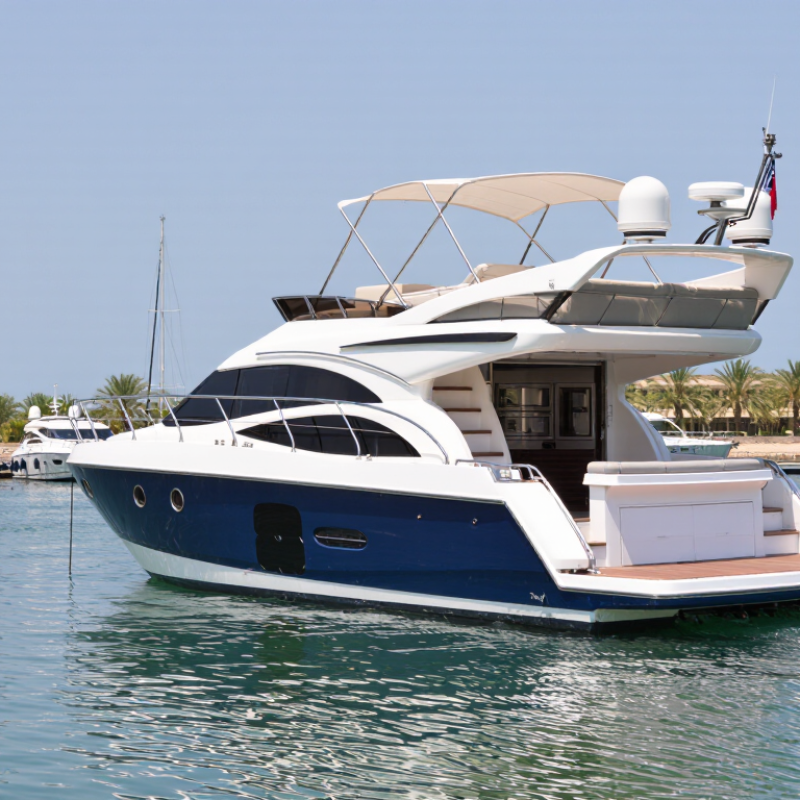
What Is a Mini Yacht and How Much Does It Cost?
What Defines a Mini Yacht?
A mini yacht is usually a compact Motor Yacht, often between 10 and 24 meters long. However, the term has no universal legal definition. ICOMIA’s 2023 Global Recreational Boating Statistical Abstract classifies vessels by length and purpose, not by one global “mini yacht” category. That makes the label flexible, and sometimes misleading.
Size alone does not define it. A mini yacht normally includes enclosed cabins, a private bathroom, a galley, and space for several guests. It may also carry advanced navigation systems, generators, stabilizers, and climate control. A 12-meter vessel with full cruising systems can feel more yacht-like than a larger open motorboat. The boundary remains fuzzy.
The United States Coast Guard recorded more than 11 million registered recreational vessels in its 2023 statistics. This broad fleet includes many boats far smaller than mini yachts. Meanwhile, the National Marine Manufacturers Association reported $230.1 billion in annual U.S. recreational boating activity and 812,000 related jobs in 2023. Those figures show a substantial market, but they do not create a standard price bracket. In practice, purchase costs vary with length, materials, engine power, interior finish, and maintenance history. A used mini yacht may cost less upfront, yet older engines and electrical systems can quickly change the calculation. That is the part buyers often underestimate.
| Dimension | Typical Mini-Yacht Range | What It Means | Common Cost or Specification |
|---|---|---|---|
| Overall Length | Approximately 30–60 feet (9–18 meters) | A mini yacht is generally smaller than a full-size yacht but offers yacht-style accommodation, amenities, and cruising capability. | Length is one of the most important factors affecting price, fuel use, and maintenance. |
| Typical Purchase Price | New: about $250,000–$3,000,000 Used: about $75,000–$1,500,000 | Prices vary substantially according to size, age, construction, engine configuration, interior finish, equipment, and condition. | Approximate market ranges; exceptional vessels may cost more. |
| Guest Capacity | Usually 4–12 overnight guests | Sleeping capacity often includes a forward cabin, an aft cabin, convertible salon seating, and one or more bathrooms. | More cabins and bathrooms usually increase the purchase price and operating costs. |
| Day-Use Capacity | Commonly 8–16 people, subject to local regulations | Day capacity depends on the vessel's certified capacity, seating, deck layout, safety equipment, and intended operating area. | Always follow the vessel's official capacity plate and local maritime rules. |
| Propulsion | Single or twin diesel engines; some models use outboards or hybrid systems | Inboard diesel engines are common on cruising-oriented mini yachts, while outboards may be used on lighter or performance-focused boats. | Engine power commonly ranges from roughly 400 to 2,000 horsepower in total. |
| Cruising Speed | Approximately 15–30 knots | Cruising speed is the practical speed used for extended travel, balancing comfort, fuel consumption, and engine load. | Actual performance depends on hull design, displacement, load, sea conditions, and engines. |
| Maximum Speed | Approximately 20–40 knots | Faster mini yachts generally have planing hulls and require more engine power and fuel than displacement or semi-displacement designs. | High-speed operation can significantly increase fuel consumption and maintenance needs. |
| Fuel Capacity | Roughly 250–2,000 gallons (950–7,570 liters) | Fuel capacity determines range, but usable range also depends on speed, sea state, engine efficiency, and reserve-fuel requirements. | Fuel costs are highly dependent on local prices and annual cruising hours. |
| Fresh-Water Capacity | Approximately 100–400 gallons (380–1,515 liters) | Fresh-water tanks supply showers, sinks, toilets, and galley use. Larger tanks support longer trips away from marinas. | Watermakers can extend cruising independence but add installation and maintenance costs. |
| Onboard Accommodation | One to three cabins and one to three bathrooms | Mini yachts typically provide enclosed sleeping areas, a salon, galley, cockpit, and outdoor entertaining space. | Interior volume and finishing quality are major contributors to the final price. |
| Range | Approximately 200–1,000 nautical miles | Range is the distance a vessel can travel before refueling while preserving an appropriate fuel reserve. | Long-range capability is more common on efficient displacement or semi-displacement hulls. |
| Annual Maintenance | Commonly 5%–10% of the vessel's value per year | Routine costs may include engine servicing, haul-out, antifouling, inspections, cleaning, repairs, and replacement of consumables. | A $500,000 yacht may require roughly $25,000–$50,000 annually, excluding major repairs. |
| Insurance | Often about 1%–2% of the insured value per year | Premiums depend on cruising area, vessel age, claims history, coverage limits, storm exposure, and owner experience. | A $500,000 yacht may cost approximately $5,000–$10,000 per year to insure. |
| Mooring or Berthing | Approximately $3,000–$30,000+ per year | Fees depend on location, berth length, marina facilities, seasonal demand, electricity, water, and the vessel's beam. | Premium coastal and metropolitan marinas may exceed this range. |
| Crew Requirement | Usually owner-operated; professional crew optional | Many mini yachts can be operated by their owners, although training and local licensing requirements may apply. | Hiring a captain or crew adds labor, travel, accommodation, and management costs. |
| Core Yacht Features | Helm station, navigation electronics, galley, cabins, bathroom, and outdoor social areas | What distinguishes a mini yacht from a standard day boat is the combination of overnight accommodation, cruising systems, and leisure-oriented amenities. | Optional equipment may include a generator, air conditioning, tender, stabilizers, and watermaker. |
| Best Use | Weekend trips, coastal cruising, entertaining, and short extended voyages | Mini yachts are designed for owners who want yacht-like comfort without the size and operating complexity of a larger yacht. | Suitability depends on draft, range, weather protection, storage, and intended cruising region. |
All figures are general industry estimates in U.S. dollars. Actual specifications and ownership costs vary by vessel design, location, age, equipment, operating profile, and market conditions.
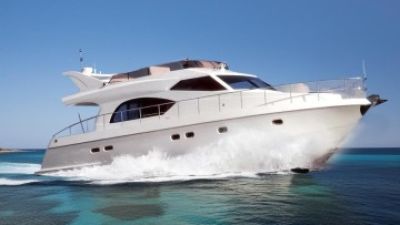
The 53-foot fiberglass motor yacht reflects the growing preference for efficient, long-range cruising in the Luxury Boating sector. ICOMIA’s recreational boating statistical abstracts track fleet growth, new-boat registrations, and market activity across dozens of national markets, highlighting continued demand for versatile vessels that combine performance with extended onboard comfort. In this context, twin 800hp engines deliver a top speed of 28 knots, while a 350-nautical-mile cruising range supports island-hopping, coastal exploration, and longer passages with fewer fuel stops. An advanced hull design enhances directional stability and ride comfort in changing sea conditions, helping balance speed, efficiency, and confidence underway.
Market forecasts from leading marine-industry analysts also identify premium motor yachts as a resilient segment, supported by rising interest in private leisure travel and multi-day cruising. This yacht is designed around that trend, offering four spacious cabins, each with an ensuite bathroom, for up to eight guests. Premium leather upholstery and teak wood finishes create a refined interior without sacrificing practical durability. The layout provides private accommodation for families or guests, while generous social areas support relaxed dining and entertainment during extended voyages. With its combination of substantial range, high-output propulsion, and residential-style amenities, the yacht aligns closely with global demand for comfortable, self-contained cruising platforms.
A mini yacht is usually a compact motor yacht measuring about 10 to 24 meters. The label has no universal legal definition. The boundary is fuzzy.
It commonly includes enclosed cabins, a private bathroom, a compact galley, and outdoor seating. Navigation equipment, generators, climate control, and stabilizers may also be included.
Prices often range from $80,000 to more than $500,000. Age, length, condition, engine power, materials, and equipment strongly affect the price.
They may cost less initially. However, old engines, weak batteries, and outdated wiring can create expensive repairs. The cheaper option may not stay cheaper.
Maintenance may reach 8% to 15% of the yacht’s value each year. Insurance, cleaning, safety equipment, storage, and marina fees add more costs.
A weekend trip can consume hundreds of dollars in fuel. Rough water and high speeds increase consumption. Calm cruising is usually easier on the budget.
A professional survey can find moisture damage, engine wear, and neglected electrical systems. Photographs rarely show everything. Skipping the inspection feels risky.
Test the engines, pumps, batteries, navigation systems, climate control, toilets, and bilge. Review engine hours and service records. I would inspect the bilge after every trip.
A Mini Yacht is a compact recreational vessel designed to offer many of the comforts and capabilities of a larger yacht in a smaller, more manageable format. Unlike ordinary small boats, it typically provides improved onboard space, enclosed or semi-enclosed accommodation, a private restroom, a compact galley, and comfortable areas for relaxation. Mini yachts can vary in size and layout, but they are commonly used for day cruising, weekend trips, fishing, entertaining, and short coastal journeys. Their specifications may include sleeping areas, seating for several passengers, efficient engines, navigation equipment, and practical storage.
The price of a Mini Yacht depends on its size, age, construction materials, engine type, interior quality, equipment, and level of customization. New models generally cost more, while pre-owned vessels may offer better value but require careful inspection. Buyers should also consider ongoing expenses such as mooring, fuel, insurance, routine servicing, cleaning, repairs, and winter storage. Understanding both the purchase price and long-term ownership costs helps ensure that the yacht matches the owner’s budget, intended activities, and maintenance expectations.