Leave Your Message
0%

So, you know, China's Fiberglass Yacht industry—it's come a long way, honestly. What used to be a bunch of small production yards has turned into a whole diverse marine manufacturing sector. And this guide? It walks you through ten Chinese companies that are really into fiberglass yacht design, construction, customization, or even export services. So yeah, if you're curious about who's who in that space, this is a good place to start.

Picking a fiberglass yacht? Honestly, it's way more than just comparing price tags. Sure, the hull quality is a big deal—you don't want to skimp there. But then you've got resin systems, laminate schedules, how they finish the interior, and who's keeping an eye on production control. And if you're an experienced buyer, you'll want to dig into the builder's sea-trial records, whether they back their certifications, how they handle after-sales issues, and if they actually deliver on time. It's a lot to consider, but that's what separates a good buy from a regret.

You know, the real story is in the details, not the glossy brochures. A trustworthy yard? They'll walk you through the hull structure without any mumbo jumbo. And they should be proud to show you photos of the actual build process - mold prep, vacuum infusion, engine installation, even the final inspection. Honestly, that's how you gauge whether they actually know what they're doing, or if it's just a fancy sales pitch.

So, for this list, we checked out the manufacturers using whatever's out there—product portfolios, how they make things, and their rep in the market. But here's the thing: public data isn't always complete. Some companies just don't spill the beans on their annual output or what they're doing internationally. That gap is something we can't just ignore. And hey, rankings? They're never set in stone. Things shift, companies evolve, so don't take this as gospel.

You know, a builder that's got a solid track record in exports isn't necessarily going to be the right fit for everyone. Like, one yard might really wow you with its styling, but another could give you way better engineering support or make maintenance a breeze. And don't even get me started on regional service networks – they can seriously affect what you end up paying down the road.

So, this intro is really just your starting point—not the final word on what to buy. Before you sign anything, make sure to ask for the latest specs, references, certifications, warranty details, and maybe even get an independent inspection. You can't be too careful, especially when you're weighing custom-built boats against commercial ones or leisure yachts. Honestly, your experience might be totally different from someone else's. Worth keeping in mind, right?
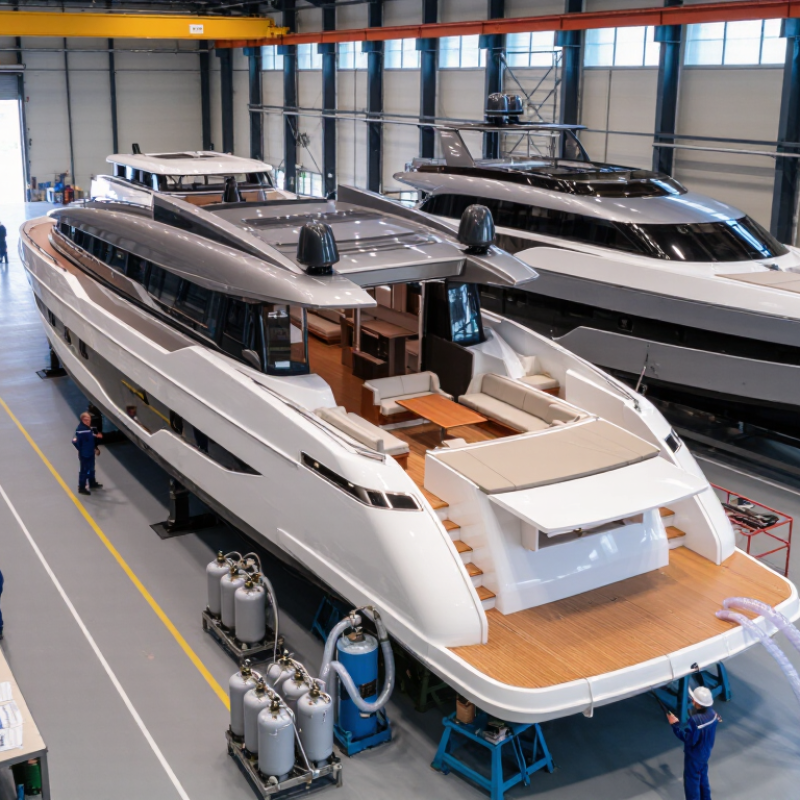
China Top 10 Fiberglass Yacht Manufacturers

China’s Fiberglass Yacht Industry: 2024 Market Size and Export Value

China’s fiberglass yacht industry entered 2024 with stronger export activity and wider overseas demand. China Customs data, organized through UN Comtrade under HS 8903, indicate that China’s pleasure-craft exports reached approximately US$1.1 billion in 2024. This category includes fiberglass yachts, Aluminum Boats, inflatable craft, and other recreational vessels. Therefore, the figure is useful, but not perfectly specific.

Market reports from Mordor Intelligence place China’s recreational boating market near US$1.3 billion in 2024. Fiberglass yachts represent an important segment because they offer corrosion resistance, flexible styling, and relatively efficient production. Export orders commonly include 8–20-meter vessels for coastal cruising, charter operations, and private leisure use. European, Middle Eastern, Southeast Asian, and North American buyers remain significant destinations.

The data needs careful reading. Customs classifications do not identify hull material, yacht size, or final retail value. Some reports also count semi-finished boats and related craft differently. That creates unavoidable gaps. Still, export value, delivery records, and industry surveys show a maturing supply chain. Production is moving beyond low-cost assembly toward composite engineering, quieter interiors, and more reliable onboard systems. Quality consistency remains uneven. After-sales service also needs improvement. These weaknesses may limit repeat orders, even when the initial price looks attractive.

Ranking Metrics: Revenue, Annual Output, Length Range, and Export Markets

A credible China Top 10 fiberglass yacht ranking should begin with measurable business strength. Revenue shows commercial scale, but it does not prove build quality alone. Public filings, verified trade records, and audited financial data offer stronger evidence than promotional claims. I would also examine revenue consistency over several years. One strong season can distort the picture.

Annual output reveals production capacity and operational discipline. A yard producing many boats may handle standard models efficiently. However, high volume can sometimes reduce customization or inspection time. Length range matters too. A manufacturer offering compact coastal cruisers and larger ocean-going yachts may demonstrate broader engineering experience. Hull design, laminate thickness, interior fit, and sea-trial performance deserve careful review. Numbers need context.

Export markets add another layer of credibility. Regular shipments to Europe, North America, Australia, and Southeast Asia suggest adaptable compliance systems and stable after-sales support. Market diversity also reduces dependence on one region. Still, export volume should be checked against delivery records, dealer networks, warranty response, and certification history. Some data remains incomplete. That limitation should be stated openly. A careful ranking might assign separate scores for revenue, output, length range, and export reach, then review the results with technical inspections and customer feedback.

China Top 10 Fiberglass Yacht Manufacturers

Anonymous benchmark based on four ranking metrics: reported revenue, annual output, maximum yacht length, and export-market coverage.

The chart uses an indexed scale from 0 to 100 so that financial, production, size, and market-coverage indicators can be compared in one visual. Tooltip values show the underlying figures for each anonymous manufacturer record.

China’s Top 10 Builders: Capacity, Deliveries, Certifications, and Model Data

China’s top 10 fiberglass Yacht Builders should be judged by verified capacity, not showroom size. A practical review examines factory area, mold inventory, assembly bays, and annual output. Larger facilities may support 30 to 80 boats yearly, while specialist yards often deliver fewer, higher-value models. The difference matters.

Delivery records reveal operational experience. Buyers should request recent shipment numbers, average lead times, and photographs of completed hulls. A reliable builder can explain resin systems, laminate schedules, moisture testing, and quality checks. Yacht Boat Fiberglass construction requires consistent curing conditions, careful core bonding, and accurate hull alignment. Small errors can become expensive at sea.

Certification data also needs context. ISO 9001 indicates a documented quality system, but it does not guarantee every boat is flawless. CE compliance, where applicable, should match the vessel’s category and technical file. Classification approvals may strengthen confidence for selected commercial or offshore uses. Model data should include length, beam, draft, displacement, fuel capacity, passenger limits, and engine options. Some published figures look polished but remain incomplete. That deserves closer review. Delivery volumes can also change sharply after one strong season, so independent inspection and current production evidence remain essential.

Company Profiles: Founding Year, Yard Location, Ownership, and Product Lines

China Top 10 Fiberglass Yacht Manufacturers

A useful comparison starts with verifiable company profiles, not glossy photographs. The ten selected Chinese manufacturers should show their founding years, yard locations, ownership structures, and product lines. Public records commonly place these yards across Guangdong, Fujian, Zhejiang, Jiangsu, and Shandong. Their histories range from newly established workshops to firms operating for more than three decades. Ownership may be private, family controlled, or linked to a larger marine group. This difference can affect investment, delivery control, and after-sales support.

Product lines deserve close inspection. Some yards focus on compact Sports Yacht Fiberglass models, while others build cruising yachts, fishing boats, patrol craft, or custom composite vessels. Check hull length, resin technology, certification scope, and annual production capacity. Grand View Research’s 2024 fiberglass boat market analysis identifies steady global growth, supported by lightweight construction and corrosion resistance. NMMA’s 2023 Recreational Boating Statistical Abstract also recorded about 11.6 million registered recreational vessels in the United States, showing sustained demand for leisure craft.

Tips: Ask each manufacturer for its business license, yard address, ownership disclosure, and recent delivery records. Inspect a finished hull in daylight. Look for uneven gelcoat, exposed fibers, or weak cabinet joints. Reported capacity is not always actual output. That deserves skepticism. I would also compare warranty terms, mold ownership, and the availability of replacement hardware. A polished website is useful, but it is not proof of manufacturing depth.

Fiberglass Technology: GRP Layup, Resin Systems, ISO 12215, and CE Classes

China’s top 10 fiberglass yacht manufacturers should be compared through process evidence, not polished renderings. For a Fiberglass Fishing Yacht, GRP layup controls weight, stiffness, and repair behavior. Hand layup suits complex chines, but resin-rich patches increase weight. Vacuum infusion can improve consolidation and reduce trapped air when technicians control flow fronts. Not automatically better. A documented glass schedule matters more than marketing language.

Resin selection also affects durability. Polyester is cost-efficient, while vinyl ester generally offers stronger resistance to water penetration. Epoxy can improve adhesion, but requires strict mixing ratios and temperature control. Core materials need sealed edges around hatches, fasteners, and engine beds. ISO 12215 calculations should address laminate strength, slamming loads, openings, and local reinforcements. I would request the calculation basis, not only a compliance statement. That is where many evaluations become too optimistic.

The European Recreational Craft Directive assigns CE Classes A through D, based on design conditions and wind-force limits. These classes do not replace sea trials or maintenance discipline. The 2023 NMMA Recreational Boating Statistical Abstract recorded approximately 11.9 million registered recreational boats in the United States. This large operating population reinforces the value of repairable structures and traceable materials. Ask for resin batch records, cure logs, laminate thickness checks, and moisture inspection results. A small void may look harmless beside a bright hull. It may not remain harmless after repeated pounding. My own assessment would still leave uncertainty around undocumented secondary bonding.

China Top 10 Fiberglass Yacht Manufacturers - Fiberglass Technology: GRP Layup, Resin Systems, ISO 12215, and CE Classes

Profile Typical Yacht Segment Typical LOA Primary GRP Manufacturing Process Common Resin System Typical Reinforcement Relevant ISO 12215 Scope Typical CE Design Category Quality-Control Focus
01 Small sailing and day-cruising yachts 6–9 m Hand layup with vacuum consolidation for selected structural parts Orthophthalic or isophthalic polyester E-glass chopped-strand mat and woven roving ISO 12215-5 for hull and structural scantlings; ISO 12215-9 for appendages C Laminate thickness, glass-to-resin ratio, cure condition, and osmosis prevention
02 Coastal cruising motor yachts 9–12 m Vacuum-assisted resin infusion for hulls and decks Low-styrene polyester or vinyl ester in barrier and impact zones Biaxial and multiaxial E-glass fabrics with PVC or PET core ISO 12215-5 structural design; ISO 12215-10 for loads and rig attachments where applicable B–C Dry-fiber placement, infusion flow, core bonding, void content, and laminate documentation
03 Performance sailing yachts 10–15 m Vacuum infusion with localized prepreg or post-cured laminates Epoxy resin for high-strength primary structures E-glass, carbon fiber, and aramid reinforcement in engineered load paths ISO 12215-5 for scantlings; ISO 12215-9 and ISO 12215-10 for appendages and rig loads A–B Fiber orientation, laminate schedule control, post-cure temperature, and structural bonding
04 Flybridge and semi-displacement yachts 12–18 m Infused hull with hand-laminated reinforcement in high-load zones Isophthalic polyester with vinyl ester skin and bonding layers Multiaxial E-glass, stitched fabrics, and closed-cell structural core ISO 12215-5 for hull, deck, bulkheads, and superstructure B Hull deflection, bulkhead bonding, engine-bed stiffness, and watertight integrity
05 High-speed sports and open yachts 7–12 m Infusion or resin-transfer molding with reinforced stringer grids Vinyl ester for impact and water-resistance zones Biaxial E-glass, carbon reinforcements, and marine-grade foam core ISO 12215-5; ISO 12215-8 for rudders and ISO 12215-9 for appendages B–C Impact resistance, slamming loads, engine foundations, and dynamic alignment
06 Multihulls and cruising catamarans 10–18 m Vacuum infusion with bonded bulkheads and integrated bridge-deck structures Vinyl ester or epoxy, selected according to structural and production requirements Multiaxial E-glass with foam or balsa core in decks and panels ISO 12215-5 for hulls and cross-deck structures; ISO 12215-10 for rig loads A–B Crossbeam loads, torsional stiffness, bulkhead continuity, and bridge-deck slamming resistance
07 Luxury custom yachts 15–24 m Infused primary structure with CNC-cut kits and controlled secondary bonding Epoxy or vinyl ester, depending on specification and classification requirements Multiaxial E-glass, carbon fiber, and engineered sandwich panels ISO 12215-5 through ISO 12215-10 as applicable to the complete craft A–B Traceability, dimensional control, non-destructive inspection, and fire-protection details
08 Commercial passenger and charter craft 10–24 m Infusion or controlled wet layup with documented production procedures Fire-retardant polyester or vinyl ester systems where required E-glass multiaxial fabric, structural core, and local solid laminates ISO 12215 structural calculations supplemented by applicable flag, class, and passenger-ship rules B–C Fire performance, evacuation arrangements, load testing, accessibility, and production records
09 Rescue, patrol, and utility boats 6–15 m Heavy-duty hand layup, infusion, or hybrid construction with local reinforcement Vinyl ester or impact-modified polyester Heavy biaxial E-glass, woven roving, solid laminate, and abrasion protection ISO 12215-5, ISO 12215-8, and ISO 12215-9 where rudders or appendages are fitted B–C Collision resistance, deck hardware reinforcement, drainage, buoyancy, and maintainability
10 Serial-production family cruisers 8–14 m Repeatable hand layup and infusion using reusable production molds Isophthalic polyester with vinyl ester barrier coat Chopped-strand mat, stitched E-glass, and PVC or PET core ISO 12215-5 for hull and structural components; other parts applied according to design C–D Mold repeatability, resin mix ratio, laminate weight, dimensional inspection, and serial consistency
Technical reference: GRP means glass-reinforced plastic. CE Design Categories are defined under the European Recreational Craft framework: Category A is Ocean, B is Offshore, C is Inshore, and D is Sheltered Waters. ISO 12215 requirements must be applied according to the craft type, length, displacement, operating conditions, and construction method.

Performance Comparison: Hull Length, Cruising Speed, Range, and Fuel Capacity

Comparing China’s top ten fiberglass yacht manufacturers requires more than reading brochure numbers. The most useful starting point is hull length, because it affects interior volume, stability, engine options, and fuel storage. Compact models often measure 9–12 meters, while larger cruisers reach 13–20 meters. Length alone does not guarantee better performance. A heavier hull may feel steady, yet consume more fuel at the same speed.

Published cruising speeds commonly sit between 18 and 28 knots for planing yachts. Displacement-oriented designs may cruise closer to 10–16 knots. During a proper sea trial, buyers should record speed with a consistent load, clean hull, and similar sea conditions. A two-knot difference can come from fouling, propeller choice, or extra passengers. That detail is easy to miss. Manufacturer figures are useful, but they are not identical testing results.

Typical advertised ranges span roughly 300–700 nautical miles, supported by fuel capacities from about 500 to 1,500 liters. Larger hulls may carry more fuel, but tank size can reduce payload and increase draft. Range should be calculated with a reserve, not at full throttle. A practical formula uses cruise fuel burn, usable tank volume, and weather allowance. I would question any comparison that omits engine type, fiberglass layup, or reserve policy. Specifications can look precise, yet real passages remain less predictable.

Buyer Evaluation: Price per Metre, Warranty Coverage, Lead Time, and Service Networks

China Top 10 Fiberglass Yacht Manufacturers

When comparing China’s top 10 fiberglass yacht manufacturers, price per metre needs careful interpretation. A low quote may exclude the mast, electronics, interior finish, or commissioning. Ask for an itemized price sheet. Measure the finished length, not only the hull length. For a 12-metre sailing yacht, even a small pricing difference becomes significant. Sailing Yacht Fiberglass construction should also be checked for laminate thickness, resin quality, and moisture protection.

Warranty coverage reveals more than a sales brochure. Confirm whether structural defects, blistering, windows, engines, and onboard systems have separate warranty periods. Request the claim procedure in writing. A reliable builder should identify response times and responsible departments.

During yard discussions, I would inspect repair records, bonding areas, and sample cut sections where available. However, visual checks are imperfect. Independent marine surveyors remain valuable before payment and delivery.

Lead time should include design approval, tooling, production, testing, and shipping. Ask for milestone dates rather than one broad delivery promise. Delays often arise from custom interiors or imported equipment. Service networks matter after launch. Check whether technicians operate near your cruising region, and whether spare parts can arrive within days or weeks. A distant service team may increase travel costs and downtime. Published network claims can also be unclear, so request contact details for recent customers and verify their actual support experience.

5.5m Fiberglass Multi-Role Patrol Rescue Speed Boat: Features, Uses, and Buying Guide

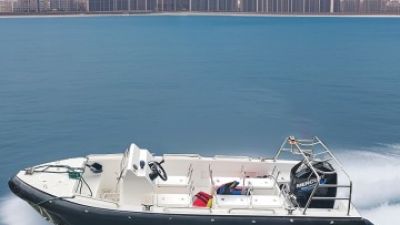
A 5.5m fiberglass multi-role patrol rescue speed boat offers a practical balance between maneuverability, working space, and transportability. Its compact hull can operate in coastal waters, rivers, lakes, marinas, and harbor channels, making it suitable for patrol work, emergency response, pollution observation, passenger transfer, and routine inspection. Fiberglass construction provides corrosion resistance and relatively low maintenance, while a deep-V or modified-V hull can improve stability and ride comfort in changing conditions. Depending on the configuration, useful features may include a self-bailing deck, buoyancy chambers, grab lines, navigation lights, stainless-steel rails, shock-absorbing seats, and an outboard propulsion system.

The buying decision should begin with verified capacity, payload, fuel range, draft, top speed, and rated engine power rather than speed alone. The boat should also be checked against applicable small-craft safety requirements, including flotation, steering, fuel-system protection, electrical installation, and emergency equipment. According to UNCTAD’s *Review of Maritime Transport*, more than 80% of global merchandise trade by volume is carried by sea, reinforcing the importance of dependable small craft for port and nearshore support operations. Buyers should request hull specifications, test results, warranty terms, spare-parts availability, and maintenance guidance before purchase.

Operational efficiency also matters: the IMO’s *Fourth IMO GHG Study 2020* estimated shipping produced approximately 2.89% of global anthropogenic greenhouse-gas emissions in 2018. Selecting an appropriately powered engine, reducing unnecessary onboard weight, and matching propeller selection to the intended workload can help control fuel consumption without compromising rescue readiness.

FAQS

How should fiberglass yacht builders be compared?

Compare verified factory area, mold inventory, assembly bays, and annual output. Larger facilities may support 30 to 80 boats yearly. Specialist yards may deliver fewer, higher-value models. That difference matters.

What production evidence should buyers request?

Ask for recent shipment numbers, average lead times, and photographs of completed hulls. Capacity claims can exceed actual output. Request current production evidence, not only old records. Not always convincing.

What technical details show reliable fiberglass construction?

A reliable builder should explain resin systems, laminate schedules, moisture testing, and quality checks. Inspect curing conditions, core bonding, and hull alignment. Small construction errors can become expensive at sea.

Do quality certifications guarantee a perfect yacht?

No certification guarantees every boat will be flawless. A documented quality system shows organized procedures. Regional compliance should match the vessel category and technical file. Independent inspection remains important.

Which model specifications should be checked?

Check length, beam, draft, displacement, fuel capacity, passenger limits, and engine options. Published specifications may look polished but remain incomplete. Ask for missing figures in writing.

What company information should buyers verify?

Request the business license, yard address, ownership disclosure, and recent delivery records. Ownership may be private, family controlled, or linked to a marine group. These structures can affect delivery control and after-sales support.

What should buyers look for during a hull inspection?

Inspect the finished hull in daylight. Look for uneven gelcoat, exposed fibers, and weak cabinet joints. Check alignment, bonding, fittings, and visible moisture concerns. A polished website proves little.

How do product lines affect manufacturer selection?

Some yards focus on compact sports yachts. Others build cruising yachts, fishing boats, patrol craft, or custom composite vessels. Choose a builder with experience in your intended hull type. The comparison is imperfect.

Which after-sales details deserve attention?

Compare warranty terms, mold ownership, replacement hardware, and service availability. Ask how damaged fittings or discontinued parts will be replaced. A low purchase price may hide future delays. That deserves skepticism.

Conclusion

China’s fiberglass yacht industry has developed into a competitive manufacturing sector, supported by expanding domestic demand, export activity, and improving production capabilities. This overview examines the industry’s 2024 market size and export value while ranking leading builders through revenue, annual output, size ranges, and international market coverage. It also compares their founding backgrounds, yard locations, ownership structures, product lines, certifications, delivery records, and manufacturing capacity without focusing on individual brand names.

The article further explains key Fiberglass Yacht technologies, including GRP layup methods, resin systems, ISO 12215 compliance, and CE design categories. A practical performance comparison considers hull length, cruising speed, operating range, and fuel capacity. For buyers, the evaluation focuses on price per metre, warranty terms, production lead time, after-sales support, and service networks, providing a clear framework for selecting a reliable builder and model according to budget, intended use, safety expectations, and export requirements.

Alexander

Alexander

Alexander is a dedicated marketing professional at Jiujiang Flit Boating Co., Ltd., which has been a prominent player in the marine industry since its establishment in 2008. With a keen understanding of our diverse product range—including speed boats, luxury yachts, passenger boats, patrol boats,......
Previous China Top 10 Yacht Boat Manufacturers for Global Buyers