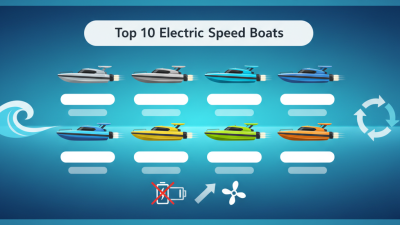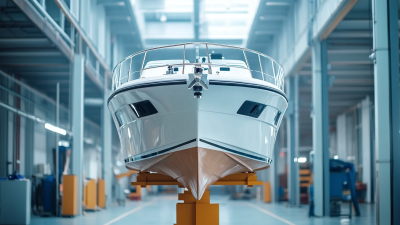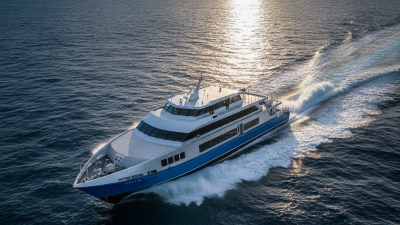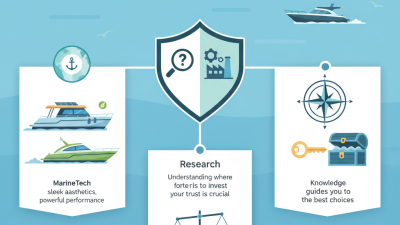
You might have noticed that Electric Speed Boats are finally moving beyond the experimental docks and into real-world discussions around the globe. Nowadays, buyers are really comparing stuff like how quickly these boats accelerate, their range, how easy it is to charge, how noisy they are, what kind of maintenance they need, and, of course, the overall cost of ownership. The thing is, the market is still pretty new, which makes making confident predictions kinda tricky.
According to the latest report from IDTechEx on Electric Boats and Ships between 2024 and 2044, key growth factors include dropping battery prices, more electrification in marine tech, and cleaner practices at ports. Meanwhile, organizations like the International Maritime Organization are pushing the shipping industry to cut down greenhouse gas emissions—thanks to their 2023 GHG Strategy. Now, even if smaller recreational boats aren’t yet regulated like big commercial ships, these trends definitely matter to speed-boat enthusiasts because, let’s be honest, a fast boat tends to gobble up energy pretty quickly.
Gustav Hasselskog, CEO of Candela, confidently says, “The future of boating is electric,” and his company’s C-8 actually shows what’s possible. It features hydrofoils, less drag, much quieter cruising, and a battery system built around real-world conditions. But, of course, how well it performs depends on stuff like water temperature, how many people are onboard, the wind, and how you charge it. Funny thing is, most marketing pics don’t really highlight these little inconveniences, do they?
This guide takes a look at some top electric speed boats available across Europe, North America, Asia, and other busy marine markets. We check out specs that have been verified, support from manufacturers, battery warranties, charging standards, seaworthiness, and how easy it is to get service when you need it. Keep in mind, independent tests are pretty sparse, and some of those range numbers are based on ideal conditions—which definitely needs a second look.
When it comes down to it, the best boat might not always be the fastest. Instead, it might be the one that can reliably get you to the nearest marina, charge up safely, and hold its value after a few years. Of course, there’ll be some trade-offs involved—that’s just how it is. Being honest about that is the best way for buyers around the world to start their journey into electric boating.
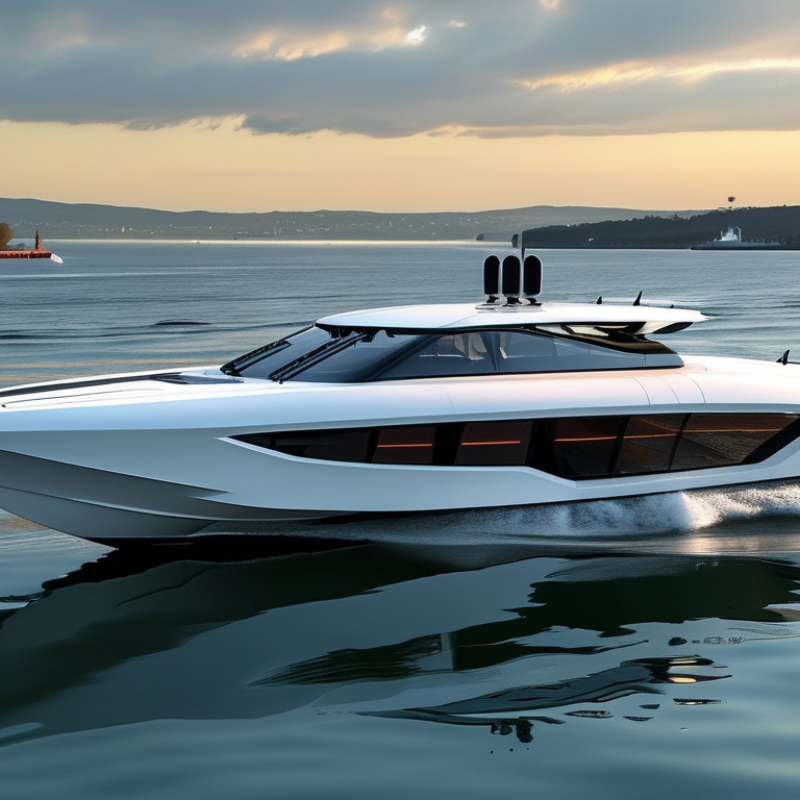
Electric-Powered Speed Boats are not simply silent craft with large batteries. They must combine acceleration, range, seaworthiness, and predictable charging. During dockside trials, a capable boat should respond smoothly at low speed, then remain stable as waves increase. That balance matters more than a headline speed figure. Real water is unforgiving. A calm demonstration lake can hide poor handling in wind, chop, or tidal current.
Battery capacity should match hull weight, passenger load, and the buyer’s usual route. A practical estimate includes reserve power for returning safely, not only the advertised range. Buyers should check charging voltage, connector compatibility, marina access, and local electrical rules before purchase. Saltwater protection deserves close inspection. Sealed compartments, corrosion-resistant fittings, and clear maintenance instructions can reduce avoidable failures. I would also ask about technician training and spare-part access across borders. Fast boats need dependable support.
Safety equipment, emergency shutoff systems, navigation lights, and documented stability testing should be easy to verify. Certification requirements may differ by country, so independent inspection is worthwhile. I have learned that comfort can expose weaknesses: a hard seat, glare, or cooling fan becomes tiring after an hour. This is easy to overlook. A lower top speed may deliver better efficiency and control. Buyers should compare energy use, charging time, service costs, and resale uncertainty. No specification sheet replaces a supervised sea trial in realistic conditions.
Electric speed boat performance begins with the powertrain, not the propeller alone. High-torque electric motors deliver immediate thrust, helping boats accelerate smoothly from low speed. Unlike combustion engines, they produce less vibration and require fewer moving parts. This improves comfort during short coastal trips and technical testing.
Battery design controls speed, range, weight, and charging time. Marine-grade battery packs need strong protection against water, salt, heat, and repeated vibration. Advanced battery management systems monitor temperature, voltage, and cell balance continuously. Thermal control matters greatly during rapid acceleration. A hot battery may reduce power without warning. That can surprise an inexperienced operator.
Hull design also shapes efficiency. Lightweight materials reduce energy demand, while a carefully designed planing hull can lift above the water at speed. Efficient propellers convert motor power into forward motion with less wasted energy. Digital control systems adjust power delivery and help maintain stability during turns. On-water testing remains essential because calm laboratory figures may not match waves, wind, passengers, or extra equipment. The numbers are not perfect. Range estimates often change in cold weather or rough water. Charging infrastructure creates another practical limit, especially at remote marinas. Reliable performance therefore depends on software, hardware, maintenance, and honest operating data working together.
Top Electric Speed Boats for Global Buyers?
Leading Electric Speed Boat Types and Models
Electric speed boats now serve several distinct boating needs. Planing runabouts deliver quick acceleration across calm water. Hydrofoil speedboats reduce drag by lifting the hull above the surface. Rigid inflatable boats offer stability, easy boarding, and flexible coastal use. Compact cabin cruisers add overnight comfort, but their larger batteries increase weight and charging time.
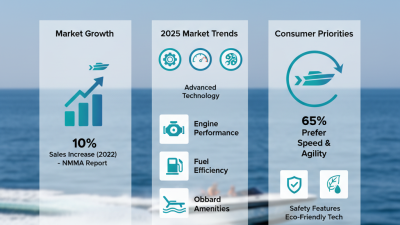
According to Grand View Research, the global electric boat market was valued at approximately USD 5.3 billion in 2023. Its report also forecasts strong double-digit growth through the next decade. The International Energy Agency reported a 14% fall in average battery-pack prices during 2023. That change supports more practical high-speed models. Still, battery weight remains a serious engineering compromise. Fast boats need power. Large batteries need space.
For global buyers, the most suitable model depends on route length, water conditions, and charging access. A 20–25-foot planing boat may suit short harbor trips. A hydrofoil model can reduce energy use, but it demands careful handling and higher technical skill. A rigid inflatable design works well for transfers and family recreation. Check usable battery capacity, continuous motor output, charger standards, and corrosion protection. Do not trust maximum speed alone. Real range can drop sharply in wind, waves, or cold water. Some published figures seem optimistic. Independent sea trials still matter.
| Electric Boat Type | Typical Length | Typical Top Speed | Battery Capacity | Typical Cruising Range | Passenger Capacity | Charging Profile | Best Use |
|---|---|---|---|---|---|---|---|
| Electric Hydrofoil Speed Boat | 6–9 m | 25–35 knots | 60–150 kWh | 50–100 nautical miles | 4–8 | AC overnight; DC fast charging on selected systems | Premium day cruising, low-wave coastal travel and efficient high-speed operation |
| Electric Performance Runabout | 5–8 m | 25–45 knots | 50–120 kWh | 30–80 nautical miles | 4–8 | Shore-power AC charging; optional higher-power marina charging | Fast recreational trips, watersports and private coastal use |
| Electric Day Cruiser | 7–11 m | 20–35 knots | 80–250 kWh | 40–120 nautical miles | 6–12 | AC charging commonly requires 6–14 hours, depending on battery size | Family outings, harbor cruising and short overnight coastal journeys |
| Electric Rigid Inflatable Boat | 4–8 m | 15–30 knots | 20–100 kWh | 20–70 nautical miles | 4–12 | Portable or shore-power charging; swappable batteries available in smaller sizes | Tender service, harbor transfers, diving and protected-water operations |
| Electric Jet Boat | 5–8 m | 20–35 knots | 50–150 kWh | 25–75 nautical miles | 4–8 | AC marina charging; charging time varies by onboard charger | Shallow-water recreation, maneuvering and watersports |
| Electric Catamaran Speed Boat | 7–12 m | 18–30 knots | 100–300 kWh | 60–160 nautical miles | 8–16 | AC charging; high-capacity shore connection recommended | Stable family cruising, sightseeing and passenger transportation |
| Electric Center-Console Boat | 5–9 m | 18–32 knots | 40–160 kWh | 30–90 nautical miles | 5–10 | AC charging; shore-power compatibility should be checked by market | Fishing, island transport and versatile coastal recreation |
| Electric Passenger Shuttle | 8–15 m | 12–25 knots | 150–500 kWh | 50–180 nautical miles | 12–40 | High-power depot or marina charging for frequent daily operation | Water taxis, resort transfers, eco-tourism and short commercial routes |
Data note: Figures are representative market ranges for comparable electric boats. Actual performance depends on hull design, battery chemistry, payload, water conditions, temperature, propeller or jet configuration, and operating speed.
When comparing an electric speed boat, start with usable range, not the headline number. In sea trials, I record speed, passengers, water temperature, wind, and battery percentage every ten minutes. A boat traveling at 30 knots can consume energy far faster than one cruising at 18 knots. Range is weather-dependent. A practical buyer should request range at two speeds, not one optimistic test condition.
Charging time depends on battery capacity, charger output, and dock wiring. A 200 kWh battery connected to a 100 kW charger needs more than two hours in ideal conditions. Real charging slows near full capacity. The IEA’s Global EV Outlook 2024 reported that global electric-vehicle battery demand exceeded 750 GWh in 2023, while average pack prices fell 14 percent. Marine packs still require stricter cooling, sealing, and corrosion protection. That difference matters for any Yacht Boat Electric purchase.
Battery life needs clearer questions. Ask for usable capacity, warranty limits, cycle testing, and replacement cost. The U.S. Department of Energy notes that temperature, charging speed, and depth of discharge strongly affect lithium-ion aging. DNV’s maritime transition studies also stress whole-life energy use, not only propulsion emissions. I would avoid buying on speed alone. A fast boat with a small reserve may become inconvenient after a few seasons, especially at crowded charging docks. My comparison sheet would include a 20 percent emergency reserve, although that reduces the advertised range and may expose weak designs.
Buying an Electric Yacht across borders requires more than comparing range and top speed. Safety begins with battery isolation, insulation monitoring, ventilation, and emergency shutdown access. The U.S. Coast Guard recorded 4,040 recreational boating accidents in 2023, with 564 deaths and 2,126 injuries. Small design shortcuts can become serious offshore problems.
Ask for documented testing, not reassuring sales language. ISO 16315 addresses electric propulsion systems for small craft, while ABYC E-13 provides widely used battery-system guidance. European buyers should check Recreational Craft Directive requirements and applicable CE documentation. U.S. buyers need to verify electrical installation, labeling, and local registration rules. These rules are not interchangeable. That is easy to miss.
Transport creates another risk. Lithium batteries may require UN 38.3 test evidence, dangerous-goods declarations, and approved packaging under the IMDG Code. Air freight can impose stricter limits than sea transport. A removable battery, weighing several hundred kilograms, may need separate handling from the hull. Port operators also request fire-response information and charging instructions. Confirm requirements before booking a vessel or truck. Regulations change. My practical concern is simple: many buyers inspect the boat, but not the paperwork chain connecting the battery, carrier, port, and destination authority. A professional surveyor and a written compliance file can prevent expensive delays.
Top Electric Speed Boats for Global Buyers?
Electric speed boats can cost more upfront than comparable conventional vessels. Prices often rise with battery capacity, hull materials, charging systems, and navigation equipment. Global buyers should also calculate shipping, import duties, insurance, and regional taxes. A lower sticker price may hide expensive delivery costs. In Electric Yacht Trade, transparent quotations should separate the boat, battery, charger, and service package. Ask for battery capacity in usable kilowatt-hours, not only marketing range. Sea conditions, passenger weight, and speed can reduce real-world range sharply.
Maintenance is quieter, but it is not maintenance-free. Owners still need to inspect propellers, seals, cooling systems, brakes, and corrosion protection. Battery health checks require qualified marine technicians and suitable diagnostic equipment. Charging standards differ between marinas and countries. A home charger may not work at a remote harbor. Warranty coverage also varies by territory, especially for batteries and electronic controllers. I have seen buyers focus on acceleration and overlook local repair access. That decision can leave a boat idle for weeks.
Tips: Request a written five-year ownership estimate before paying a deposit. Include charging, winter storage, haul-outs, insurance, software service, and battery testing. Visit the service facility if possible. Check emergency procedures. Keep a small range reserve. It feels inconvenient, but weather changes quickly. Do not assume resale value will remain strong; battery technology evolves, and older systems may depreciate faster than expected. A marine surveyor can verify build quality, while a local electrician can confirm shore-power compatibility.
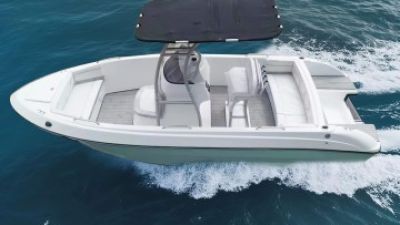
The 6.2M Luxury Mini Yacht is designed for up to eight passengers, offering a comfortable platform for fishing, water sports, and relaxed coastal cruising. Its 20-foot fiberglass hull combines a lightweight structure with excellent corrosion resistance, making it well suited to seawater and freshwater environments. The hull length provides a reassuring balance of stability and seaworthiness, helping passengers enjoy a steady ride while casting, moving around the deck, or sharing time with family and friends.
Practical fishing features can include rod holders, a live well, and dedicated storage compartments for tackle, equipment, and personal belongings. Powered by an outboard motor, the boat is straightforward to operate for either a solo owner or a small group, while providing enough performance for everyday recreation. Fiberglass construction also helps reduce maintenance demands compared with many traditional materials, and its long service life can offer strong value for budget-conscious buyers. Whether used for an early-morning fishing trip, an energetic day on the water, or a peaceful afternoon cruise, this mini yacht brings versatility and convenience into one compact design.
: It combines acceleration, usable range, stable handling, and predictable charging. Top speed is not enough. The boat should remain controlled in wind, waves, and tidal current.
Match battery capacity with hull weight, passengers, route length, and weather. Keep reserve power for returning safely. Published range can be optimistic. Cold water and strong wind may reduce range sharply.
Planing boats suit short, fast trips on calmer water. Hydrofoil boats can reduce drag but require skilled handling. Rigid inflatable boats offer stable boarding and flexible coastal use. Cabin cruisers provide comfort, but need larger batteries.
Check charging voltage, connector type, charging time, and marina access. Confirm local electrical requirements before purchase. A fast charger is useless without compatible shore power. This detail is often missed.
Look for sealed battery compartments, insulation monitoring, and emergency shutoffs. Verify ventilation, navigation lights, and documented stability testing. Inspect corrosion-resistant fittings for saltwater use. Small shortcuts can become serious offshore problems.
Test low-speed steering, acceleration, braking, turning, and wave handling. Carry the expected passenger load. Check the boat after one hour, not only ten minutes. Comfort exposes weaknesses.
Request certification documents, electrical test records, registration information, and maintenance instructions. Battery transport may require test evidence, declarations, and approved packaging. Check requirements with the carrier, port, and destination authority. Paperwork can delay a good boat.
Ask about technician training, remote assistance, and spare-part availability across borders. Confirm who handles battery faults and charging-system repairs. Fast boats need dependable support. I would not assume support is included.
An Electric Speed Boat combines high-performance propulsion with quieter, cleaner operation for buyers seeking fast and efficient travel on lakes, rivers, and coastal waters. This overview explains the technologies that shape performance, including electric motors, battery capacity, hull design, power management, and charging systems. It also introduces major categories such as compact recreational boats, performance-oriented models, and practical family vessels, helping global buyers understand how different designs meet different travel needs.
The guide compares speed, cruising range, charging time, battery lifespan, and expected performance in varied water and weather conditions. It also discusses safety equipment, operator training, regional compliance requirements, and the practical challenges of transporting a boat across international markets. Finally, readers will learn how to evaluate purchase prices, charging infrastructure, maintenance schedules, battery replacement, storage, and long-term ownership costs before selecting an Electric Speed Boat that matches their budget, destination, and usage plans.