Leave Your Message
Picking the right Ferry Speed Boat manufacturer isn’t just about checking out the top speeds. Sure, speed is important, but there’s a lot more to consider—like passenger comfort, fuel efficiency, how easy they are to maintain, and how well they handle different sea conditions. In this guide, I’ll introduce you to ten well-known manufacturers who really know their stuff when it comes to high-speed passenger ferries.
We looked into things like the company’s history, technical specs they've published, their completed ferry projects, and feedback from real operators. Some companies—like Austal, Damen Shipyards, Incat Crowther, Fincantieri, and Rodriquez Superyachts—each have their own design approach. Some focus on lightweight aluminum catamarans, while others build bigger vessels with cutting-edge composite materials, hybrid power systems, or layouts optimized for larger groups of passengers.
Details really do matter.
A ferry might look great during a smooth-water trial, but once it’s running day-to-day, certain weaknesses can pop up. Things like easy engine access, spray protection, boarding setups, and support for spare parts all play a big role in how well it performs long-term. A vessel carrying 200 folks has different needs compared to a small coastal shuttle. The route length, port infrastructure, wave conditions, and local safety requirements all come into play when making your pick.
And keep in mind, this ranking isn’t set in stone. The market can shift pretty fast based on what ships get delivered, new tech, and regional demands. Also, not every manufacturer makes all their operational data available, which makes direct comparisons trickier. So, it’s a good idea to double-check the latest specs, the vessel's classification status, warranty details, and references from other operators before jumping into a purchase. What you'll find here is a practical look—balancing engineering smarts with reliable service and real-world usability.
Hope this helps you get a clearer picture—happy boat hunting!
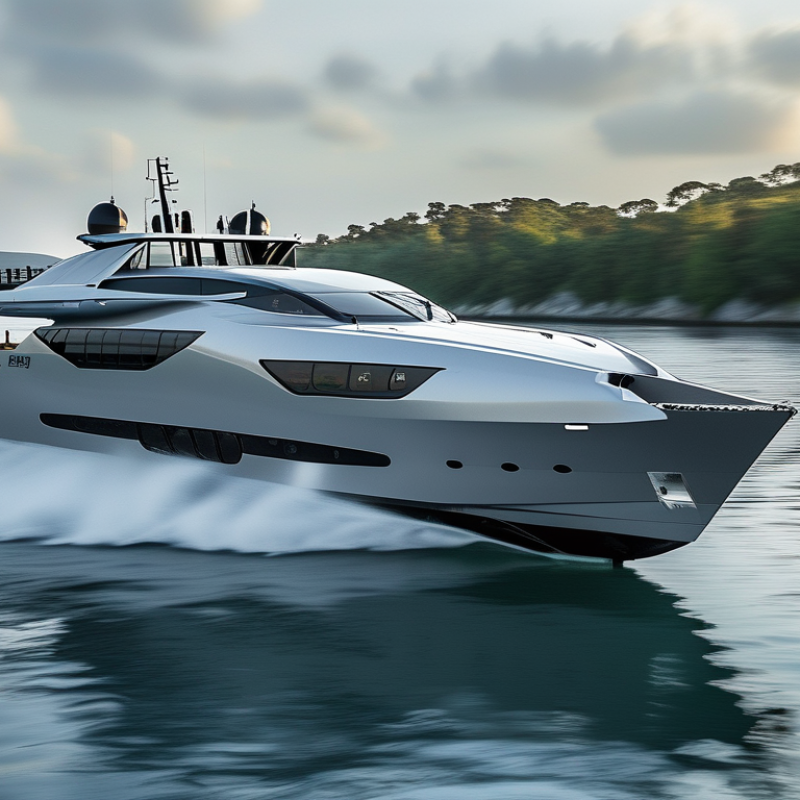
Top 10 Ferry Speed Boat Manufacturers Worldwide?
A high-performance ferry speed boat manufacturer is defined by more than maximum knots. It must balance propulsion, passenger comfort, safety, and operating cost. Sea trials should measure acceleration, stopping distance, turning stability, vibration, and fuel consumption under realistic loading. A polished brochure is not enough.
The IMO’s 2000 High-Speed Craft Code requires structured attention to stability, fire protection, machinery, and evacuation. Its 2023 GHG Strategy also targets net-zero emissions from international shipping around 2050, with interim reductions by 2030 and 2040. Therefore, leading builders now evaluate lightweight structures, hybrid propulsion, battery integration, and shore-power compatibility. DNV’s Maritime Forecast to 2050 repeatedly highlights efficiency, scalable energy systems, and lifecycle readiness as major investment factors.
Operational evidence matters more than showroom performance. UNCTAD’s Review of Maritime Transport reports that ships carry over 80% of global merchandise trade by volume, showing why port reliability and energy efficiency matter across maritime transport. For passenger ferries, a manufacturer should provide documented maintenance intervals, component traceability, crew training, and independent compliance records. Small details matter. A quiet cabin, dry boarding ramp, and predictable docking response can define daily service quality.
The phrase Boat High Speed Boat sounds awkward, yet it reflects a common buying mistake: focusing on speed alone. A faster hull may consume more energy, amplify spray, or punish passengers in rough water. No manufacturer gets every trade-off right. Buyers should question test conditions, payload assumptions, weather limits, and real route data before ranking the top ten.
Industry benchmark framework for evaluating high-performance ferry speed boat manufacturers. Company names and brand-specific figures are intentionally omitted.
| Rank | Evaluation Dimension | Recognized Industry Benchmark | What High Performance Typically Looks Like | Why It Matters |
|---|---|---|---|---|
| 01 | Commercial Operating Speed | Approximately 25–50 knots for high-speed passenger ferry applications, depending on vessel size, route, payload, and sea conditions. | High-speed capability Maintains reliable service speed without compromising passenger safety or ride comfort. | Shortens crossing times and allows operators to run more daily departures. |
| 02 | Hull Design and Hydrodynamics | Common high-speed configurations include monohulls, catamarans, and other multi-hull designs optimized for reduced resistance. | Efficient hull form Uses computational design, model testing, and optimized length-to-beam proportions. | Affects speed, fuel consumption, stability, passenger comfort, and seakeeping. |
| 03 | Propulsion System Integration | High-speed ferries commonly use diesel engines, waterjets, surface-piercing propellers, or conventional propellers selected for the mission profile. | Matched propulsion Engine, gearbox, jet, propeller, and hull are engineered as one integrated performance system. | Determines acceleration, top speed, maneuverability, maintenance needs, and operating cost. |
| 04 | Passenger Capacity and Payload | Passenger capacity can range from small commuter configurations to several hundred passengers on larger commercial ferries. | Payload efficiency Provides high passenger density while preserving evacuation routes, stability margins, and luggage space. | Directly influences route revenue, vessel size, trim, draft, and fuel consumption. |
| 05 | Structural Materials | Marine-grade aluminum alloys and fiber-reinforced composites are widely used in high-speed vessel construction; steel is more common for larger displacement vessels. | Low structural weight Uses suitable materials, welding or lamination controls, corrosion protection, and fatigue-aware structural design. | Lower weight improves speed and efficiency while maintaining adequate strength and durability. |
| 06 | Safety and Regulatory Compliance | Commercial high-speed passenger vessels may be designed and certified under applicable flag-state rules, classification requirements, and the IMO High-Speed Craft Code where applicable. | Certified operation Includes fire protection, lifesaving appliances, navigation systems, emergency procedures, and documented safety management. | Enables legal operation and protects passengers, crew, assets, and insurers. |
| 07 | Ride Comfort and Seakeeping | Performance is evaluated through motion response, vibration, noise, slamming behavior, and passenger comfort in the vessel’s intended sea states. | Comfort-focused design Reduces vertical acceleration, vibration, interior noise, and spray exposure through hull and propulsion optimization. | Improves passenger satisfaction and helps maintain schedules in changing weather conditions. |
| 08 | Fuel and Energy Efficiency | Efficiency depends on hull resistance, displacement, propulsion loading, route profile, operating speed, and hotel-load demand. | Lower lifecycle cost Uses efficient cruising modes, lightweight construction, optimized propulsors, and accurate fuel-monitoring systems. | Fuel is one of the largest variable expenses in daily ferry operations. |
| 09 | Build Quality and Delivery Capability | Reliable builders use documented quality systems, controlled production processes, traceable materials, and repeatable testing procedures. | Consistent production Demonstrates predictable delivery schedules, sea-trial validation, commissioning support, and quality assurance. | Reduces construction risk, downtime, defects, and delays before commercial deployment. |
| 10 | After-Sales Support and Lifecycle Service | Commercial operators generally require spare-parts availability, technical documentation, crew training, warranty support, and scheduled maintenance assistance. | Long-term support Provides responsive service coverage, maintenance planning, digital diagnostics, and retrofit capability. | Maximizes vessel availability and protects the operator’s long-term investment. |
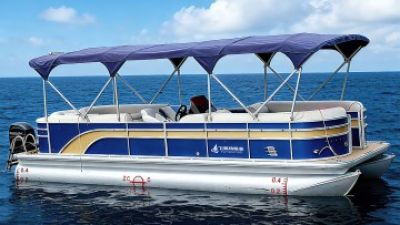
The 7-meter luxury yacht aluminum pontoon boat reflects a growing preference for recreational vessels that combine comfort, stability, and practical performance. Insights associated with the NMMA’s 2024 Recreational Boating Statistical Abstract point to continued interest in boating experiences that are accessible, versatile, and suitable for social leisure. Within this environment, aluminum pontoon construction offers a balanced platform for cruising, sightseeing, fishing, and waterfront entertainment.
A vessel in this category can be designed with a spacious deck, refined seating, weather-resistant upholstery, integrated storage, and a convenient swim platform. Its broad pontoon structure supports a stable ride, while aluminum construction helps reduce maintenance demands and improves durability in varied aquatic environments. A length of approximately seven meters also provides enough room for premium amenities without becoming difficult to transport, dock, or maneuver.
Market expectations increasingly favor efficient layouts, user-friendly controls, responsible power options, and customizable interiors. Buyers may look for quiet operation, dependable handling, attractive lighting, and flexible seating arrangements that adapt from relaxed family outings to elegant private gatherings. These features position the luxury aluminum pontoon boat as a practical response to evolving recreational boating preferences.
Monohulls suit narrow terminals and rougher coastal routes. Catamarans offer wider decks and less passenger rolling. Trimarans add central stability. No design wins everywhere.
Compact island shuttles often carry 12 to 50 passengers. Regional ferries may carry 80 to 250. Larger commuter vessels can carry 300 to 800.A certified seating plan matters more than a sales estimate. Luggage, crew, fuel, and local rules reduce practical capacity.
Waterjets keep exposed underwater equipment away from shallow docks. They can reduce damage risks near sandbars and busy boarding areas.They are not perfect. Maintenance access and fuel consumption still require careful checking.
Digital navigation, automatic trim control, thermal monitoring, and active ride stabilization support safer service.Hybrid diesel-battery systems can reduce departure noise and fuel use. Performance may vary on longer routes.
High speed can increase spray, noise, vibration, and docking difficulty. Enclosed cabins and shock-absorbing seats can help.A wet stairway matters. It may cause a real boarding problem.
Operators should review independent sea trials, maintenance records, vibration levels, boarding time, and passenger comfort.They should also test the vessel with local crews. Brochures rarely show every weakness.
Cold-water routes often require enclosed cabins and reliable safety systems. Tropical routes need corrosion protection and shallow-water adaptability.Mediterranean services may need sun protection and smooth boarding. Conditions differ greatly.
Not completely. Some range figures appear optimistic during rough seas. Demonstration performance may differ from daily service.Fuel use, waves, passenger weight, and docking schedules change real results. That deserves more skepticism.
Spare-part supply, maintenance access, crew training, local certification, and corrosion protection strongly affect operating costs.A fast vessel may become inconvenient. Small details can decide the fleet’s future.
This article explores the global Ferry Speed Boat manufacturing sector and explains what distinguishes a high-performance builder from a standard vessel supplier. It examines key evaluation factors, including hull design, propulsion efficiency, cruising speed, stability, safety systems, construction quality, passenger comfort, after-sales support, and the ability to customize vessels for different routes and operating conditions. The comparison also considers manufacturers by regional expertise, production capabilities, innovation, and market focus.
The article reviews common vessel designs, advanced navigation and propulsion technologies, and passenger-capacity ranges suitable for short-distance transportation, island connections, coastal services, and commuter routes. It also highlights how regional conditions influence design priorities, such as fuel efficiency, weather resistance, shallow-water performance, and maintenance requirements. Finally, operators are guided through the process of selecting the right Ferry Speed Boat manufacturer by assessing route demands, operating costs, service support, delivery capability, crew requirements, and long-term fleet objectives.